Introduction
When talking about healthcare, it is impossible to ignore the mention of machine learning and artificial intelligence (AI) since it is currently playing a large and extensive role in the industry. Healthcare is significantly impacted by AI through the deployment of machine learning in various sectors such as drug discovery research, diagnostics, treatment personalization, predictive analytics, operational optimization, and other areas. There is no obscurity regarding the potential imminence of machine learning in the healthcare industry. If machine learning is combined with healthcare, a plethora of improvements can be ascertained such as saving time, money, and manpower involved, enhancing patient care, increasing precision, and improving disease diagnostics which can lead to predictions, decisions, and surprising discoveries. However, it is believed to be one of the complicated challenges as it is embedded with issues. In this paper, the challenges, AI methods, and applications of the use of AI in healthcare are clarified.
1. overview of artificial intelligence
Artificial Intelligence is a general term used to describe a broad range of software and hardware technologies that mimic human cognitive functions. AI software can have elements of one or more of the following techniques: logic and reasoning models that can be trained to possess human-like cognitive skills, including the capability to interact with other technologies and people; machine learning models that can be trained using pattern recognition, data analytics, and neural networks; advanced computational approaches to understanding spoken or written natural language, as well as developing natural language processing systems; and awareness developed using some combination of inputs such as cameras, microphones, or output sensors. The most cutting-edge AI research is focused on using learnings from human biology for complex systems development
Artificial Intelligence can be software-based, but can also include discrete hardware solutions, and also some much more complex concepts like self-driving car fluid hydraulics controllers or adaptive traffic light control models when placed in a new or experimental physical technology design. Some AI technologies are used to support healthcare processes by tracking a patient’s smoking cessation progress when they enter data into a smartphone app or by assessing a patient’s reaction and responses to a telehealth consultation in real time. Other AI technologies are used to automate business processes such as laboratory work and medical records organization
2. Historical context of AI in Healthcare
The road to artificial intelligence in medicine began in the 1950s in New York State, with a pioneering study in the field of medical data analysis conducted on cancer pathology. As processing capabilities increased and new data presentation techniques became available, interest in medical data, mainly in the form of clinical practice implementation, grew. In the mid-1970s, connection machines capable of handling a large number of cases and assumptions were involved in question-answering systems, non-numeric symbol manipulation, and pure data. The software included expert systems and the means of interpreting information in medical data contributing to the growth of health care data.
As software technology advanced, the idea became popular that artificial intelligence could be used to help healthcare providers make decisions. In addition to handling health care data resources better than traditional application-specific software, smart systems could help healthcare workers follow best practices. In some application areas, such as medicine, certain patient profiling and medical imaging, there were relatively few publications on interpretations of the data. However, there was an increasing interest in medical data interpretation as the volume of electronic health care data available exploded, mainly due to the growth in electronic health records, available genomics, and large-scale medical imaging data
3. Current Application of AI in Healthcare
AI technologies have widespread applications in health, including imaging, diagnostics, health monitoring, prediction, and personalized treatment. These technologies have reached a stage where barriers to widespread adoption have been significantly reduced in some settings. One of the best-known AI applications in health is a system that allows personalized treatment of cancer to be designed. This system can analyze the meaning and context of structured and unstructured data in clinical notes and reports that may be associated with a patient’s case and medical recor.
Another recent example is a system that has the ability to predict acute kidney injury (AKI) by analyzing patient data. A study reported that using AI is as good as trained radiologists for detecting small lung cancers in patients. The machine is also faster—48 seconds instead of the minimum average time reported for radiologists of 51 minutes. Recently, it has also been awarded approval for clinical use in a commercial clinical radiology. Despite the fact that this AI application was the best-known for generating specialized cancer treatments, the recent dismissal of dozens of its developers shows that the road to greater clinical use and good clinical practice is not exempt from problems that also affect other applications. These developers have left, or those who have left in the course of 2017, the promoters now depart from the originality of the system that can quickly and efficiently determine the right treatment for a patient responding to sometimes immediate difficulties with extremely variable cancerous cases.
Conclusion
AI is an active field of research with various approaches leading to results that already make a positive impact in healthcare. While this is promising, AI alone is not sufficient to address all challenges in healthcare. Many of the challenges of a digitized healthcare world such as managing patient data, keeping it secure, interpreting the right parts and creating and preserving trust can only be addressed at the intersection of AI, information technology, and medicine. The difficulties often do not lie within the AI algorithmic models but in the transfer of AI to clinical live scenarios or integrating AI algorithms into administrative and healthcare processes.
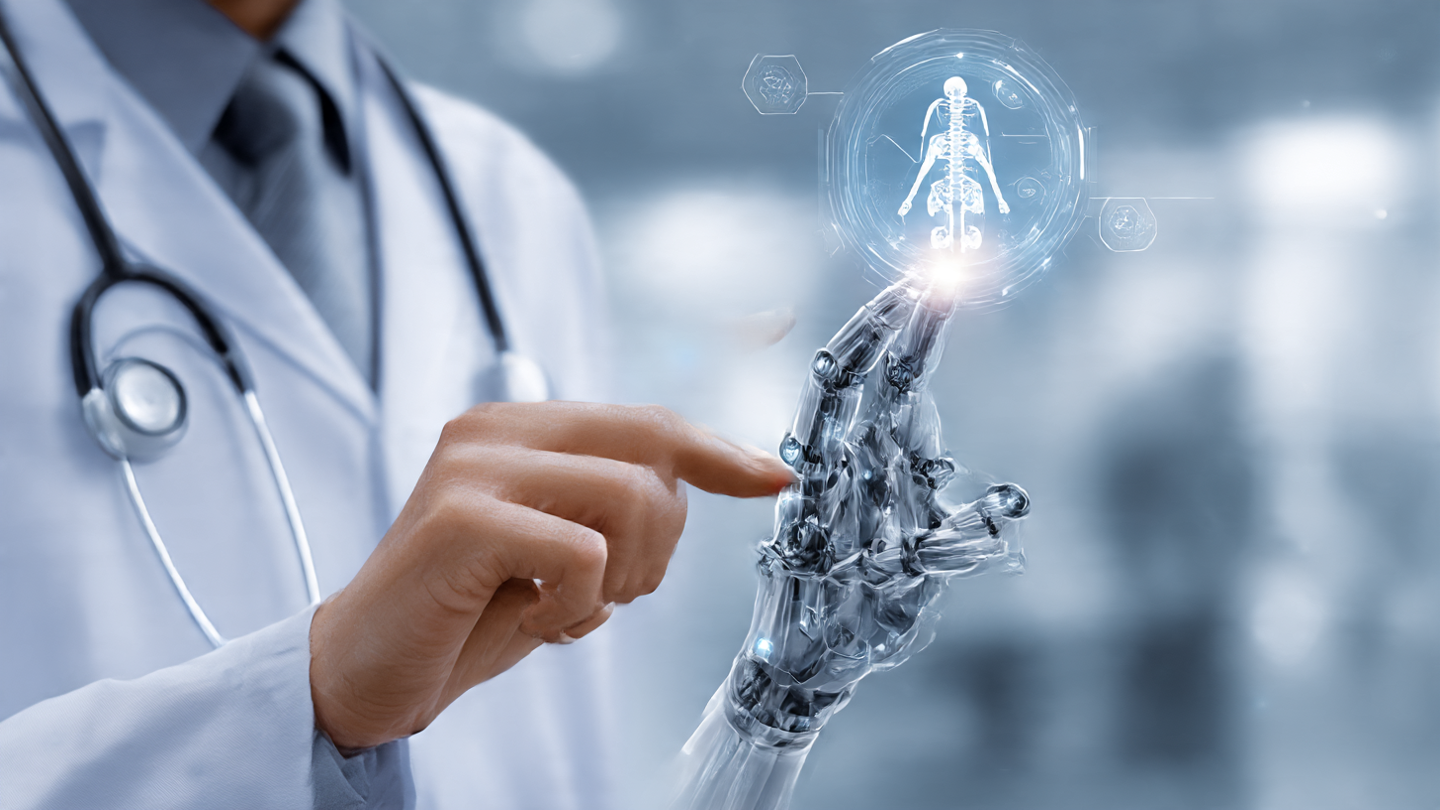
The role of Artificial Intelligence in Healthcare
by
Tags:
Leave a Reply